Istanbul Public Transport 2026: Metro, Fares and Istanbulkart
· Updated:
Istanbul public transport in 2026: metro lines, Marmaray, Metrobüs, ferries and taxis, the new fare table, Istanbulkart tips and choosing a home near the metro.
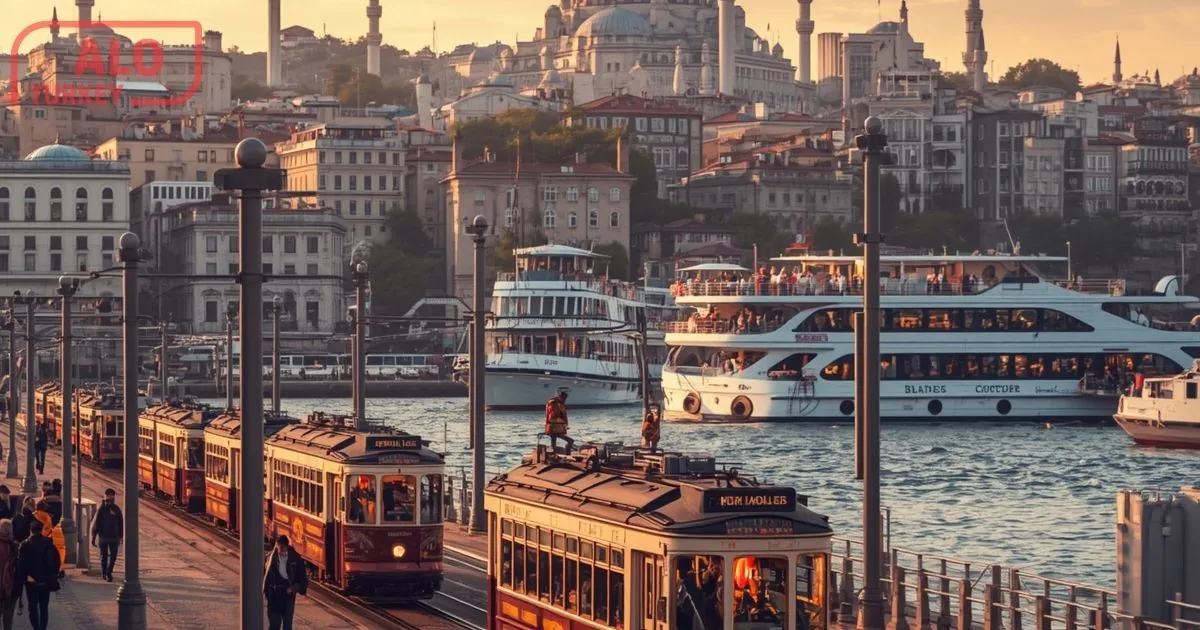
Istanbul public transport is made up of the metro, Marmaray, Metrobüs, trams, ferries, buses and minibuses, and all of them run on a single card, the Istanbulkart. Since 20 July 2026 the standard fare with an Istanbulkart is 46.20 lira per ride, and according to the Istanbul Metropolitan Municipality the city's rail network reached 380.7 km in April 2026. This guide covers the main lines, the new fare table, taxis, getting to and from the airports, and what all this means when choosing where to live.
If you have just arrived in Istanbul, or you are planning to buy a home and apply for residency, knowing this network is about more than daily commuting. The distance from your home to the nearest metro or Marmaray station directly affects your time and monthly costs, and it is an important factor for many tenants too.
Istanbulkart: one card for everything
The Istanbulkart is a rechargeable smart card accepted on the metro, Marmaray, Metrobüs, trams, funiculars, city buses, city ferries and minibuses. The municipality says about 9.5 million trips were recorded on the system on the busiest day of 2025.
- Anonymous card (anonim): sold at the yellow card machines in stations and at authorised kiosks. The price of the card itself is separate from the balance and is shown on the machine's screen.
- Card registered in your name: once you personalise the card in the İstanbulkart app, you get the discount on onward rides within one journey (aktarma).
- Student card and monthly Blue Card (Mavi Kart): the student card requires proof of student status, and the Blue Card suits people who commute every day. For the rules on foreign students, see the Turkey student residence permit guide.
You can top up the card at the yellow machines in stations, at authorised kiosks and in the app. Always keep a little extra balance, as some smaller stations have no top-up machine.
Istanbul public transport fares 2026
The tariff below was approved by the Istanbul Metropolitan Municipal Council (İBB Meclisi) and has applied since Monday 20 July 2026. It is about 10 percent higher than the February 2026 tariff.
| Ride or card type | Fare (Turkish lira) |
|---|---|
| Standard ride with Istanbulkart (tam) | 46.20 |
| Student ride | 22.55 |
| Standard monthly Blue Card | 3,628 |
| Student monthly Blue Card | 653 |
| Metrobüs, one stop | 33.08 |
| Metrobüs, 34 stops or more | 68.59 |
| Marmaray, longest trip (36 to 43 stations) | 82.17 |
| Ferry Üsküdar – Eminönü | 58.52 |
| Ferry Kadıköy – Eminönü or Beşiktaş | 65.21 |
| Ferry Bostancı – Princes' Islands | 171.89 |
| Minibus, up to 4 km | 43 |
Source: Istanbul Municipal Council decision, as reported by CNN Türk (September 2026) and Feribot Seferleri (July 2026). Fares in Turkey usually rise once or twice a year, so go by the figure on the machine before you travel.
A simple calculation: the monthly Blue Card costs about the same as 79 standard rides. If you ride fewer than about 80 times a month, a normal top-up is usually cheaper. To compare with other expenses, read the cost of living in Istanbul 2026.
Istanbul metro: main lines and what each is for
The metro is the backbone of Istanbul public transport. According to a municipal report from April 2026, the city's rail network, including the Transport Ministry's lines, is 380.7 km long and is planned to reach about 398 km by the end of 2026.
| Line | Route | Main use |
|---|---|---|
| M1A | Yenikapı – Atatürk Airport | Western European side, Marmaray connection at Yenikapı |
| M1B | Yenikapı – Kirazlı | Connection to M3 at Kirazlı |
| M2 | Yenikapı – Hacıosman | Taksim, Şişli, Levent and Maslak |
| M3 | Bakırköy Sahil – Kayaşehir Merkez | Bakırköy and Başakşehir |
| M4 | Kadıköy – Sabiha Gökçen Airport | Main axis of the Asian side |
| M5 | Üsküdar – Sultanbeyli | Ümraniye, Çekmeköy and Sancaktepe |
| M6 | Levent – Hisarüstü | Boğaziçi University |
| M7 | Yıldız – Mahmutbey | Beşiktaş, Mecidiyeköy and Kağıthane |
| M8 | Bostancı – Parseller | Asian side, Marmaray connection at Bostancı |
| M9 | Ataköy – Olimpiyat | Western European side, Marmaray connection at Ataköy |
| M11 | Gayrettepe – Halkalı | Istanbul Airport, Kağıthane and Göktürk |
Two important changes this year: the M5 line was completed to Sultanbeyli in May 2026, and the M11 reached 69 km when its Arnavutköy–Halkalı section opened in June 2026. The M10 and M12 lines are still under construction. To see which neighbourhoods sit along these lines, read the best Istanbul areas near the metro.
Marmaray: under the Bosphorus
Marmaray is a commuter rail line that runs from Halkalı on the European side to Gebze on the Asian side, passing through a tunnel under the Bosphorus. The line is about 76 km long with 43 stations, and the full journey takes about 108 minutes. It is operated by TCDD Taşımacılık, and the fare rises in steps with the number of stations travelled.
Key Marmaray interchanges are Yenikapı (M1 and M2), Üsküdar (M5), Ayrılık Çeşmesi (M4), Bostancı (M8), Ataköy (M9) and Halkalı (M11). To cross from Europe to Asia without bridge traffic, Marmaray is usually the fastest option.
Metrobüs
The Metrobüs is a line of long buses running in a dedicated lane in the middle of the motorway, from Beylikdüzü to Söğütlüçeşme in Kadıköy. It has 44 stops, is more than 50 km long and crosses the Bosphorus Bridge. Fares depend on the number of stops.
- Advantage: it avoids traffic and links the west of the city directly with the centre and the Asian side.
- Drawback: it is very crowded in the morning and evening rush hours.
Trams and funiculars
The T1 tram starts at Kabataş and runs through Karaköy, Eminönü and Sultanahmet to Bağcılar. It is the best option for the historic and tourist areas. The F1 funicular links Kabataş with Taksim Square and the M2 line in about two and a half minutes.
City ferries (Şehir Hatları)
City ferries connect the piers of Kadıköy, Üsküdar, Eminönü, Karaköy, Beşiktaş and the Princes' Islands. Their winter timetable runs from 7 September 2026 to 27 June 2027. You pay with the same Istanbulkart, and for crossing between the two continents the ferry avoids traffic and comes with a view of the Bosphorus.
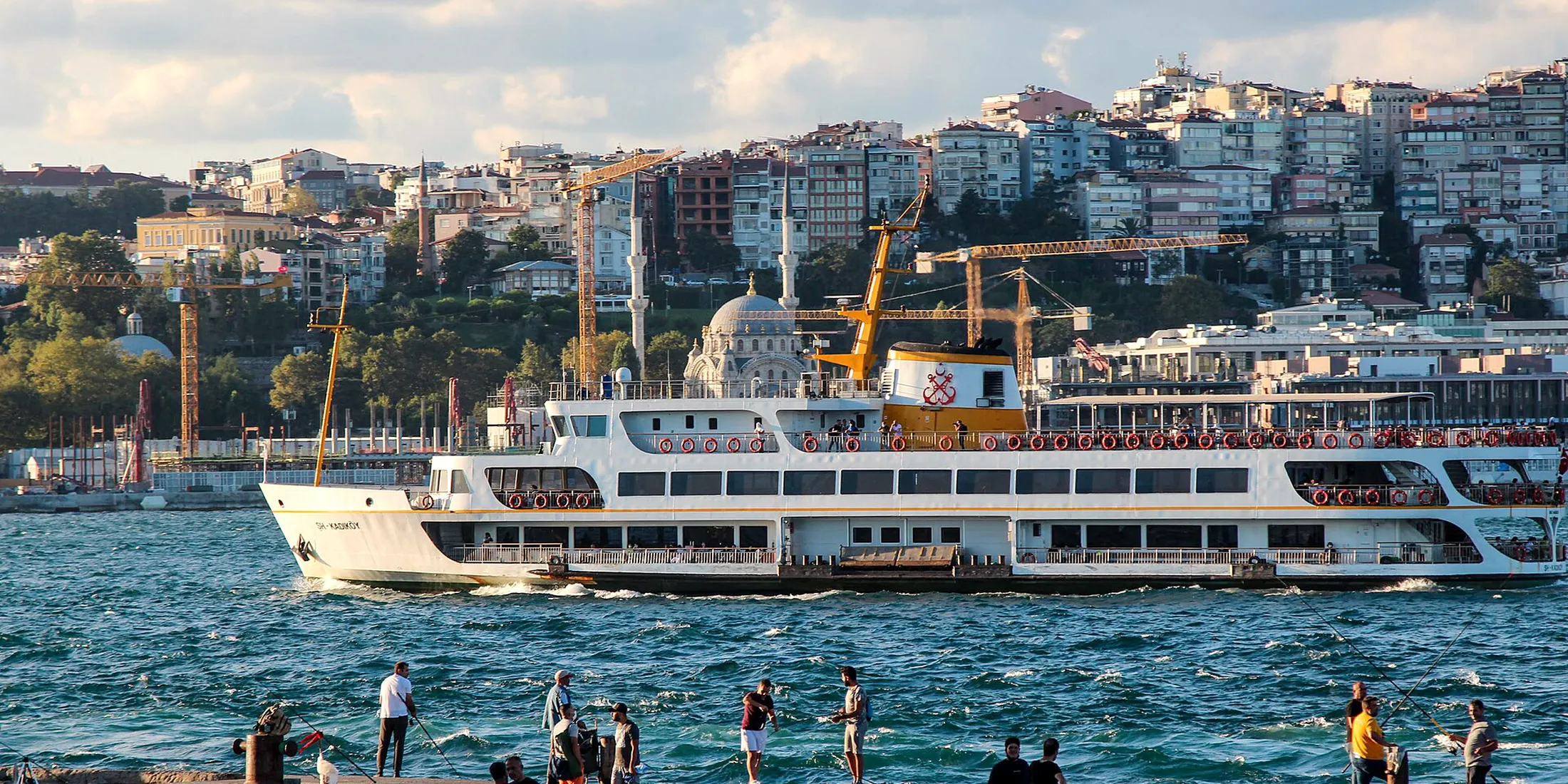
Ferry routes also pass the Bosphorus waterfront landmarks, and many residents prefer a daily ferry commute to bridge traffic.
Buses, minibuses and dolmuş
Istanbul's city buses are run by IETT and reach almost every neighbourhood, but they slow down in traffic. Minibuses and dolmuş shared taxis follow fixed routes and pick up and drop off anywhere along them. Minibus fares depend on distance and start at 43 lira for trips of up to 4 km.
Taxis in Istanbul: 2026 fares
Taxis were also covered by the July 2026 decision and come in three groups:
| Taxi type | Starting fee (lira) | Per km (lira) | Minimum fare (lira) |
|---|---|---|---|
| Yellow | 71.94 | 47.92 | 230 |
| Turquoise (turkuaz) | 82.73 | 55.10 | 265 |
| Black (luxury) | 122.30 | 81.46 | 400 |
Source: Istanbul Municipal Council decision, in force from 20 July 2026, as reported by Habertürk.
- Make sure the taximeter is running from the start of the trip.
- Bridge and tunnel tolls are added to the fare separately.
- The BiTaksi app is useful for calling a taxi and following the route.
Getting to and from Istanbul's airports
- Istanbul Airport (İstanbul Havalimanı): the M11 line runs from the terminal to Gayrettepe, where it connects with the M2. Since June 2026 the same line also continues in the other direction to Halkalı and its Marmaray station. According to the airport, Havaist buses run on 11 routes into the city, with timetables at hava.ist.
- Sabiha Gökçen Airport: the M4 line links the airport directly with Kadıköy.
In their first days, when they do not yet know the card and the routes, or when they view several property projects in one day, many newcomers use car rental in Istanbul through aloautos.com.
Public transport and choosing a home in Istanbul
When you choose a home to live in or to rent out, ask three questions: how many minutes' walk is the nearest rail station, does that line reach your workplace or school, and how many changes does it take to get to the centre. See how the two sides of the city compare on this in living on the Asian or European side of Istanbul, and the list of neighbourhoods in Istanbul areas.
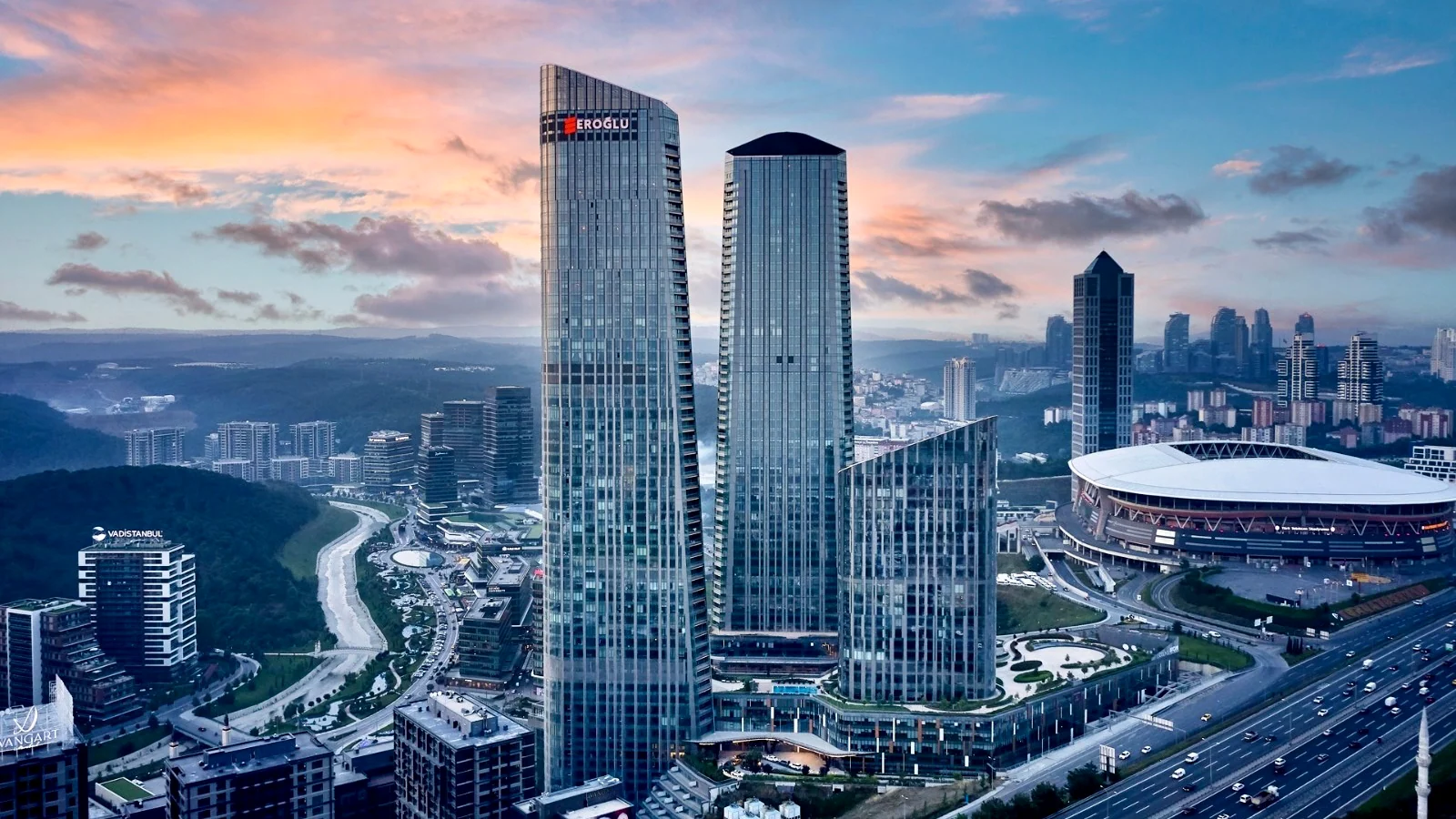
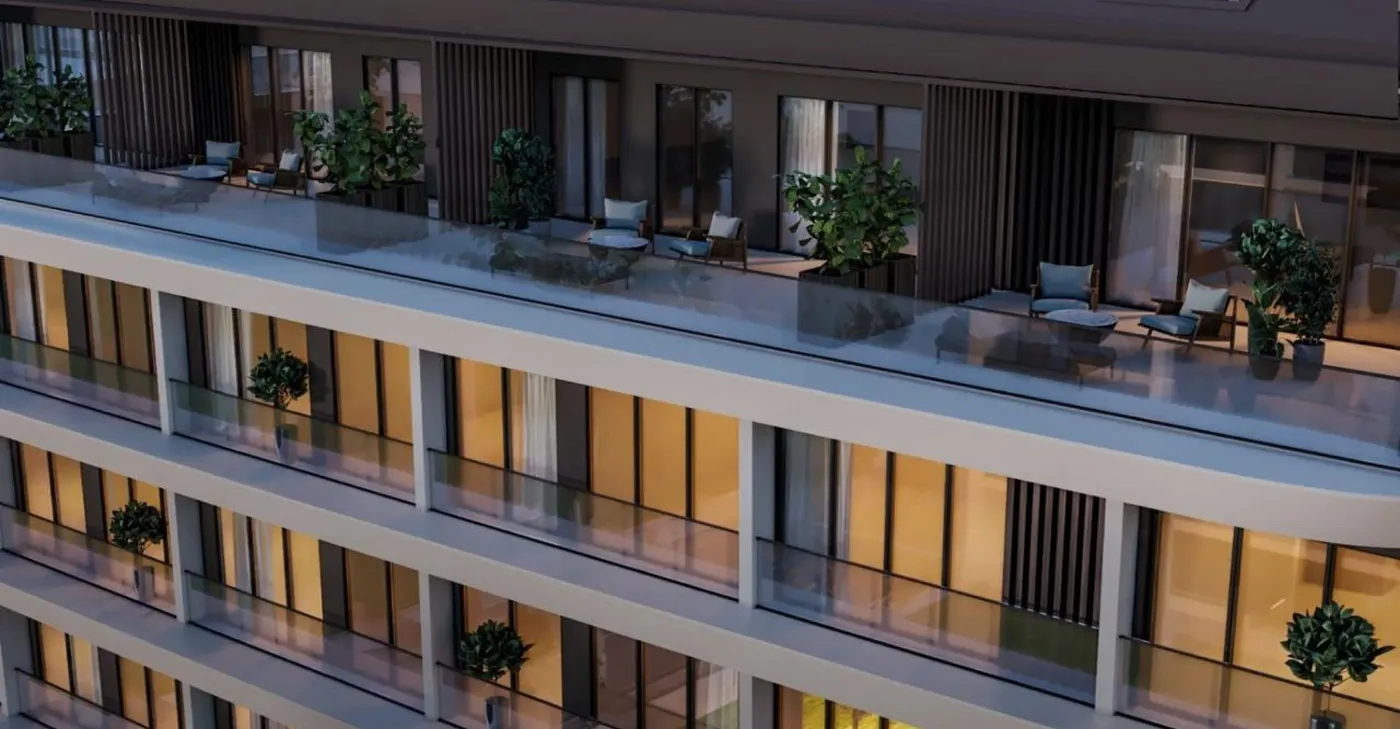
For example, the Kağıthane district has both an M7 station and an M11 station on the line to Istanbul Airport. The Galleria Park Residence project, one of ALO TURKEY's listings, is in this district. Read more in the Kağıthane district guide.
First-week checklist in Istanbul
- Buy an Istanbulkart and register it in your name in the İstanbulkart app.
- Install a route planner such as Moovit or Google Maps, plus the BiTaksi app.
- Before using a phone bought abroad for long, complete phone and SIM registration in Turkey so your apps are not cut off.
- Try your home-to-work route once at rush hour and once off-peak.
- If you commute every day, compare your first month's spending with the monthly Blue Card.
- For intercity travel and other cities, read public transport in Turkey.
Frequently asked questions
How much is the Istanbul metro fare in 2026?
Since 20 July 2026 a standard ride with an Istanbulkart costs 46.20 lira and a student ride 22.55 lira. Metrobüs and Marmaray fares depend on the number of stops or stations.
Where can you go by metro from Istanbul Airport?
In one direction the M11 reaches Gayrettepe and the M2 line. In the other direction, since June 2026, it runs to Halkalı and Marmaray.
Who is the monthly Blue Card worth it for?
For anyone who takes more than about 80 standard rides a month. It costs 3,628 lira, roughly the same as 79 standard fares.
What is the fastest way to get from Europe to Asia?
At most times of day it is Marmaray, because it runs through the tunnel under the Bosphorus and avoids bridge traffic. The ferry is a cheap and relaxed alternative.
Do you need a car to live in Istanbul?
If you live near the metro or Marmaray, public transport is usually enough. For families, or in neighbourhoods far from rail lines, a car is more convenient. For driving rules, see converting an Iranian driving licence to a Turkish licence.
Free consultation with ALO TURKEY
If you want a home near the metro or Marmaray that works both for living in and for renting out, ALO TURKEY's consultants compare districts and projects based on your workplace, school and budget. Contact us on WhatsApp or through our contact page.
Sources: Istanbul Metropolitan Municipality (July 2026 tariff decision and April 2026 rail network report), CNN Türk (September 2026), Feribot Seferleri (July 2026), Habertürk (July 2026), Istanbul Airport (istairport.com, November 2026), TCDD Taşımacılık and Turkish Wikipedia (May 2026).