Istanbul Apartment Running Costs: Aidat, Tax and Bills
What does an Istanbul apartment cost each year after you buy? Aidat, annual property tax, high-value home tax, earthquake insurance and utility bills.
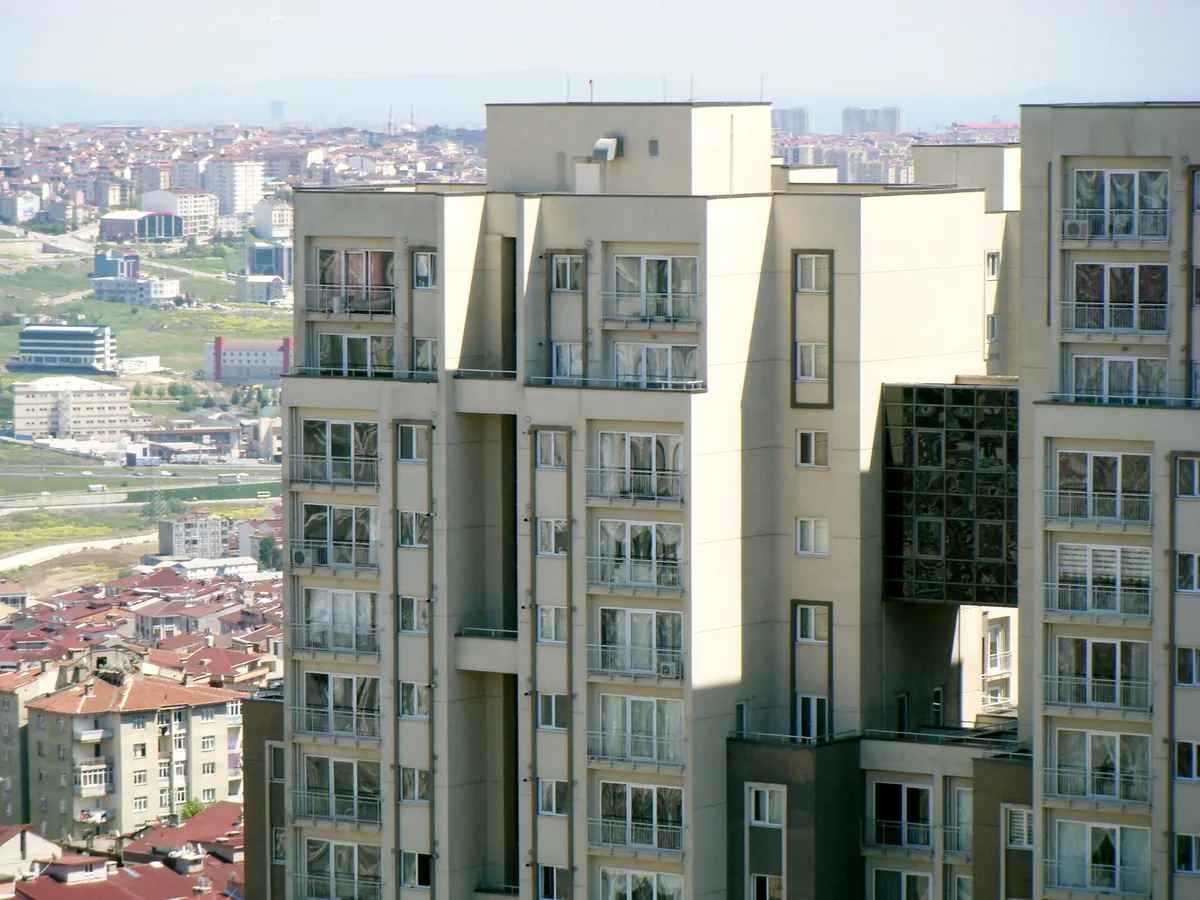
The annual running costs of an apartment in Istanbul do not end with the purchase price. Every owner, whether they live in the apartment or rent it out, faces several fixed costs each year: the building service charge, or "aidat"; the annual property tax, or "emlak vergisi"; compulsory earthquake insurance; and water, electricity and gas bills. For some high-value properties there is also a separate tax called the "high-value residence tax" (Değerli Konut Vergisi). In this article we explain what each of these costs is, who has to pay it, when it falls due, and how you can build it into your calculations before you buy.
If you are interested in the one-off costs of buying (title deed transfer tax, fees and so on), read the article Property purchase tax in Turkey and hidden costs. This article is about the costs that come round year after year after you get the title deed.
1. Building service charge (aidat): the biggest monthly cost
Aidat is each unit's share of the shared costs of the building or complex: cleaning, security, elevators, lighting and electricity for common areas, upkeep of green spaces, the pool and gym, the complex manager's salary, and the repair fund. In large complexes with full facilities (24-hour security, a pool, a fitness hall), aidat is usually noticeably higher than in a simple multi-story building.
How is aidat set?
The legal framework for aidat is Turkey's Condominium Law (Kat Mülkiyeti Kanunu, No. 634). Under Article 20 of this law, the principle is that each owner shares the common costs in proportion to their land share (arsa payı); but owners can set a different method by a decision of the owners' assembly or through the building's management plan (yönetim planı). In other words, the amount of aidat is not set by law; it is a budget approved by the complex management and the owners' assembly, and it may change every year.
What happens if aidat is not paid?
Under the same Article 20, a late-payment penalty of 5 percent per month can be charged on overdue aidat, and the building management can pursue it through the enforcement office (icra) without needing a court ruling. For an investor who lives outside Turkey, this means a small forgotten debt can grow quickly.
Another important point for those who rent out their property: the lease is only between you and the tenant. As far as the building management is concerned, the owner is primarily responsible for paying aidat; so even if you have put the payment of aidat on the tenant in the contract, still make sure it is paid regularly. We have written more about leases in the article Complete guide to renting property in Turkey.
What to ask about aidat before buying
- The current aidat for this unit and the date of its last increase
- Exactly which services aidat covers, and whether central heating is included
- Whether the current owner has aidat debts; ask the complex management for a clearance certificate
- Whether a big expense (such as renovating the facade or the elevator) is on the owners' assembly agenda
2. Annual property tax (Emlak Vergisi)
Emlak vergisi is a tax that every owner of a building or land in Turkey, whether a Turkish citizen or a foreigner, pays each year to the district municipality (belediye) where the property is located. Its basis is the property's "tax value", which the municipality sets from official tables and which is usually far lower than the market price.
Rate and payment dates
- The rate for a residential unit in ordinary cities is one per thousand of the tax value, and within metropolitan municipalities, including Istanbul, it is doubled to two per thousand.
- The tax is paid in two equal installments. In 2026 the deadline for the first installment was 1 June, and the deadline for the second is 1 to 30 November 2026.
- Late payment is subject to a late-payment penalty.
Why was the 2026 tax higher than before?
The base values for emlak vergisi are revised across the board every few years. The latest revision took place in 2025, and the new values are valid for 2026 onward; for this reason many owners faced a significant rise in the tax in 2026. In response to these rises, Law No. 7566 (December 2025) set a cap on how much the 2026 tax value could rise compared with 2025. The same law also changed the method for updating the tax value each year in the following years. The exact calculation differs for each property, so ask the district municipality or your advisor for the actual amount.
Who pays in the year of purchase?
Under the emlak vergisi law, the tax for the year in which the property is sold, and for earlier years, is the responsibility of the seller, and the buyer's responsibility begins at the start of the year after the purchase. However, if the seller has overdue debts, the buyer is also jointly liable to the municipality (and can later claim it back from the seller). So before the title deed transfer, don't forget to request a check for outstanding property tax debt.
A change of ownership must also be reported to the municipality within the same year (and, if it happened in the last three months of the year, within three months). In practice, many buyers do this through their advisor or lawyer.
3. High-value residence tax (Değerli Konut Vergisi)
This tax applies only to residential units whose tax value (the same base as emlak vergisi, not the market price) exceeds the legal threshold. For 2026 the threshold was set at TL 17,711,000, and the rates are tiered:
| Unit tax value (TL) | Rate |
|---|---|
| 17,711,000 to 26,567,000 | three per thousand |
| 26,567,001 to 35,425,000 | six per thousand |
| Above 35,425,000 | ten per thousand |
The return for this tax is filed through the online tax office of Turkey's Revenue Administration; the deadline for 2026 was 20 February, and payment is made in two installments, in February and August. According to the official announcement, people who own only one property subject to this tax do not file a return. The exemption conditions have details; if you own a unit in Istanbul's high-priced neighborhoods or plan to buy one, check your position with a tax advisor before February.
4. Compulsory earthquake insurance (DASK)
Earthquake insurance is compulsory for residential units in Turkey and must be renewed every year. The premium depends on factors such as floor area, type of structure and location. We have set out the full details, including the difference between DASK and full building insurance, in the Guide to earthquake insurance (DASK) in Turkey.
5. Bills: water, electricity and gas
In Istanbul, water and sewage are supplied by the municipal water authority (İSKİ), and city gas by the Istanbul Gas company (İGDAŞ), while electricity is provided through the regional electricity distribution and retail companies. A few practical points:
- City cleaning charge: For residential units, the environment and cleaning tax (çevre temizlik vergisi) is calculated on water consumption and comes with the water bill. According to the notice published in Turkey's Official Gazette on 31 December 2025, its amount in 2026 in metropolitan cities is TL 4 per cubic meter of water.
- Subscriptions in the owner's or tenant's name: If you rent the property out, it is better to transfer the subscriptions to the tenant's name so that unpaid bills are not registered against you.
- Special rules for foreigners: In 2023, İSKİ introduced stricter rules for water subscriptions by foreign nationals, including that the registered residence address must match the subscription address. Exceptions have been made for title deed holders. These rules may change; before you act, ask the authority itself or your advisor about the current conditions.
- Subscription deposit: Utility companies usually take a guarantee deposit (güvence bedeli) when the contract is signed, and the amount may be higher for foreign nationals.
6. Costs that get forgotten in budgeting
- Repair fund and extraordinary expenses: Major repairs such as the roof, facade or heating system are usually charged to owners separately from the monthly aidat.
- An empty unit: Even if the unit stays empty for several months, aidat and property tax still have to be paid.
- Remote management: If you are outside Turkey, the cost of the person or company who follows up payments and property matters is also part of the running cost.
- Tax on rental income: If you rent the property out, the rental income is subject to separate tax rules. We have written about rental yields in the article How much rental income can you earn from a home in Istanbul?
A simple list for the annual budget
- Monthly aidat multiplied by twelve, plus a reserve for extraordinary expenses
- Emlak vergisi (two installments, in spring and autumn)
- If applicable, the high-value residence tax (two installments, in February and August)
- Annual renewal of DASK insurance
- Bills, if the unit is empty or you live in it yourself
Frequently asked questions
Do foreigners also have to pay emlak vergisi?
Yes. This tax is levied on the property, not on the owner's nationality; foreign owners pay it to the district municipality just like Turkish citizens.
Who sets the amount of aidat?
The building management and the owners' assembly. The law only sets the framework for dividing costs (the principle is the land-share ratio unless the owners agree otherwise).
In the year of purchase, is the property tax paid by the buyer or the seller?
By the seller; the buyer's responsibility begins at the start of the following year. But earlier overdue debts may also be claimed from the buyer, so request a check before the title deed transfer.
Is the high-value residence tax calculated on the market price?
No. Its basis is the tax value set for emlak vergisi, which is usually lower than the market price. For 2026 the exemption threshold was a tax value of TL 17,711,000.
Free consultation with ALO TURKEY
Tax rules and the amounts of these costs change every year, and what is in this article is not a substitute for professional advice. Before you buy, ask the ALO TURKEY advisors to check the aidat, the debt status and the running costs of the unit you have in mind. To see available projects, visit the properties page, and to talk to us, get in touch via WhatsApp or the contact page.
Sources: Turkey's Official Gazette (Resmî Gazete) and Notice No. 59 under the Municipal Revenues Law (31 December 2025); Turkey's Revenue Administration announcement on the 2026 high-value residence tax, as cited by Alomaliye; Condominium Law No. 634, as cited by Hürriyet, Takvim and Hukuki Haber; Law No. 7566, as cited by Dünya and EY Türkiye; 2026 emlak vergisi installment schedule, as cited by Memurlar.net and Akbank; İSKİ decisions, as cited by Cumhuriyet (October 2023). Figures are for 2026.